If you camp where it freezes, battery chemistry stops being a footnote and becomes the whole story. Lithium is still the better choice for most, but only if you pick a battery built for the cold. Here's what actually happens to LiFePO4 below freezing — and how to buy right.

The one rule that matters
Never charge a standard LiFePO4 battery below 0°C / 32°F. Charging lithium in freezing temperatures plates metallic lithium onto the anode, which is permanent, irreversible damage. Every reputable lithium battery has a Battery Management System (BMS) that blocks charging when it's too cold — so a standard lithium may simply refuse to charge on a winter morning. Discharging (using power) is fine cold; it's the charging that's dangerous.
Low-temperature cut-off (the baseline)
Any quality lithium battery includes a low-temp charge cut-off, typically around 0–5°C. That protects the cells, but it means a standard battery parked in the cold won't take a charge from your solar or alternator until it warms up. For shoulder-season and winter camping, that limitation is a real problem.
Self-heating cells: the cold-weather fix
"Self-heating" or "low-temperature" lithium batteries add a heating element and a temperature sensor. When the BMS sees freezing temps and a charge source, it diverts a small amount of incoming current to warm the cells to a safe range before allowing full charge. You get safe charging even below freezing — at the cost of some efficiency (the heater draws a few amps).
If you camp below ~40°F regularly, a heated model is worth the premium. If you only see occasional cold nights, a standard lithium that simply waits to charge until it warms may be enough.
Lithium vs AGM in the cold
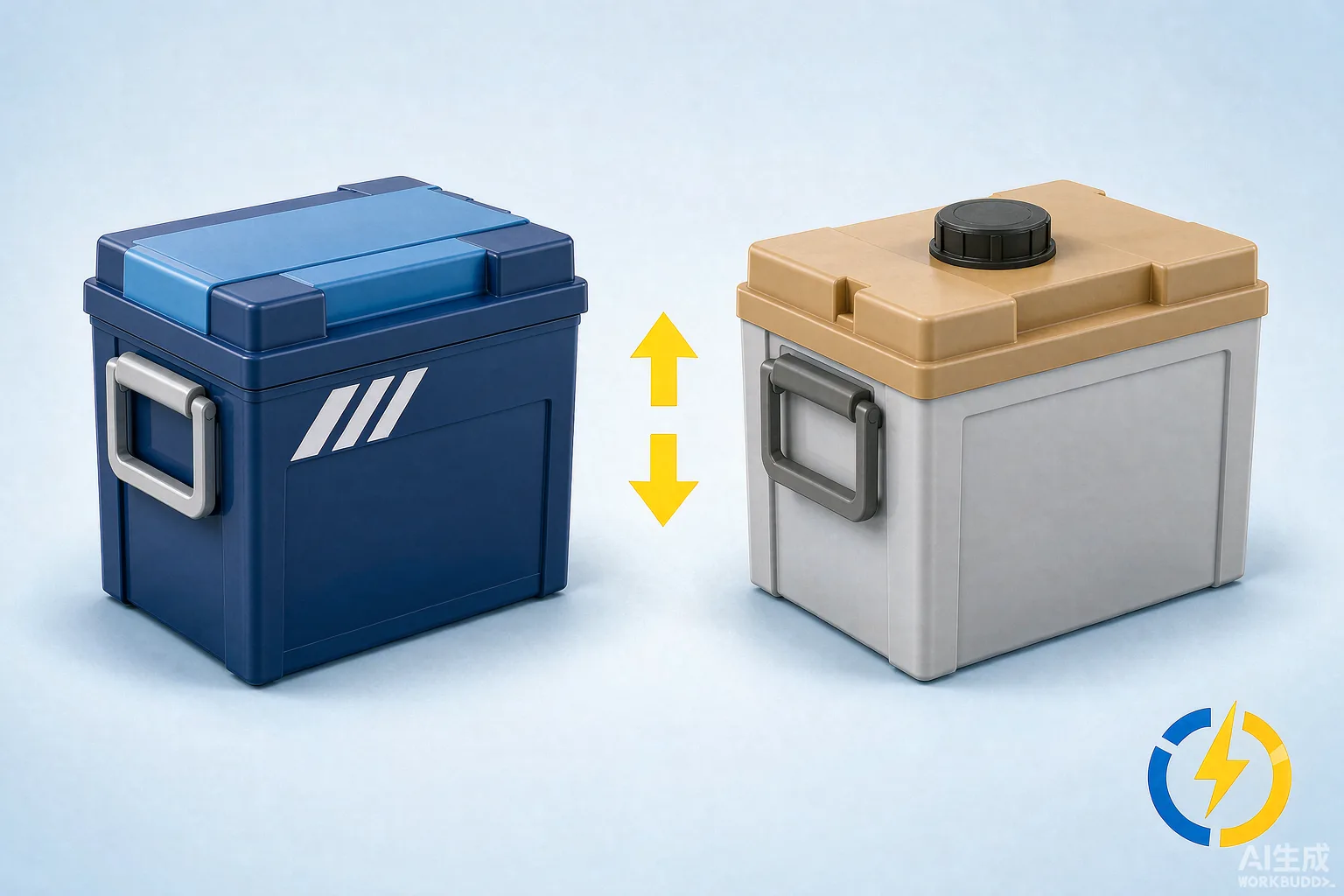
| LiFePO4 (standard) | LiFePO4 (heated) | AGM | |
|---|---|---|---|
| Charge below freezing | Blocked by BMS | Yes (self-heating) | Yes |
| Discharge below freezing | OK (reduced capacity) | OK | OK (reduced capacity) |
| Usable capacity cold | ~80–90% at 0°C | ~80–90% at 0°C | ~70–80% at 0°C |
| Weight | Light | Light | Heavy |
| Cycles | 2,000–5,000 | 2,000–5,000 | 300–700 |
AGM charges in the cold but is heavy, shorter-lived, and only gives ~50% usable capacity. For winter RVing, a heated lithium usually wins on total usable energy per trip.
What to look for when buying
- Explicit low-temp charge cut-off (always) and, for cold climates, self-heating.
- BlueTooth / app monitoring so you can see cell temperature and state of charge without opening the bay.
- UL9540A cell certification if your build needs code compliance.
- A robust BMS with over/under-voltage, over-current, and temperature protection.
Batteries we recommend
314Ah LiFePO4 — best for full-timing
Stores for heated and standard models:
Visit HumsiENK Store Visit Wattcycle Store
Frequently asked questions
Can you charge a lithium RV battery in freezing weather?
Only if the battery has low-temperature protection. Standard LiFePO4 must not be charged below 0°C/32°F — doing so permanently damages the cells. Cold-weather (self-heating) models warm the cells with a small draw from the charger before allowing charge, so they handle sub-freezing charging safely.
Do lithium batteries lose capacity in the cold?
Yes, like all chemistries. Expect roughly 10–20% less usable capacity around freezing and more below it. The bigger issue is charging: discharging is fine cold, but charging a non-heated lithium below freezing is blocked by the BMS.
Is AGM better than lithium for winter?
AGM charges in the cold, but it's far heavier, shorter-lived, and only ~50% usable. A heated lithium typically delivers more total usable energy per winter trip, which is why most cold-weather RVers still choose lithium.
Disclosure: RV Battery Hub is reader-supported and may earn from qualifying links at no extra cost to you. Prices and availability shown on retailer sites are final. This guide is editorial and not sponsored by any manufacturer.